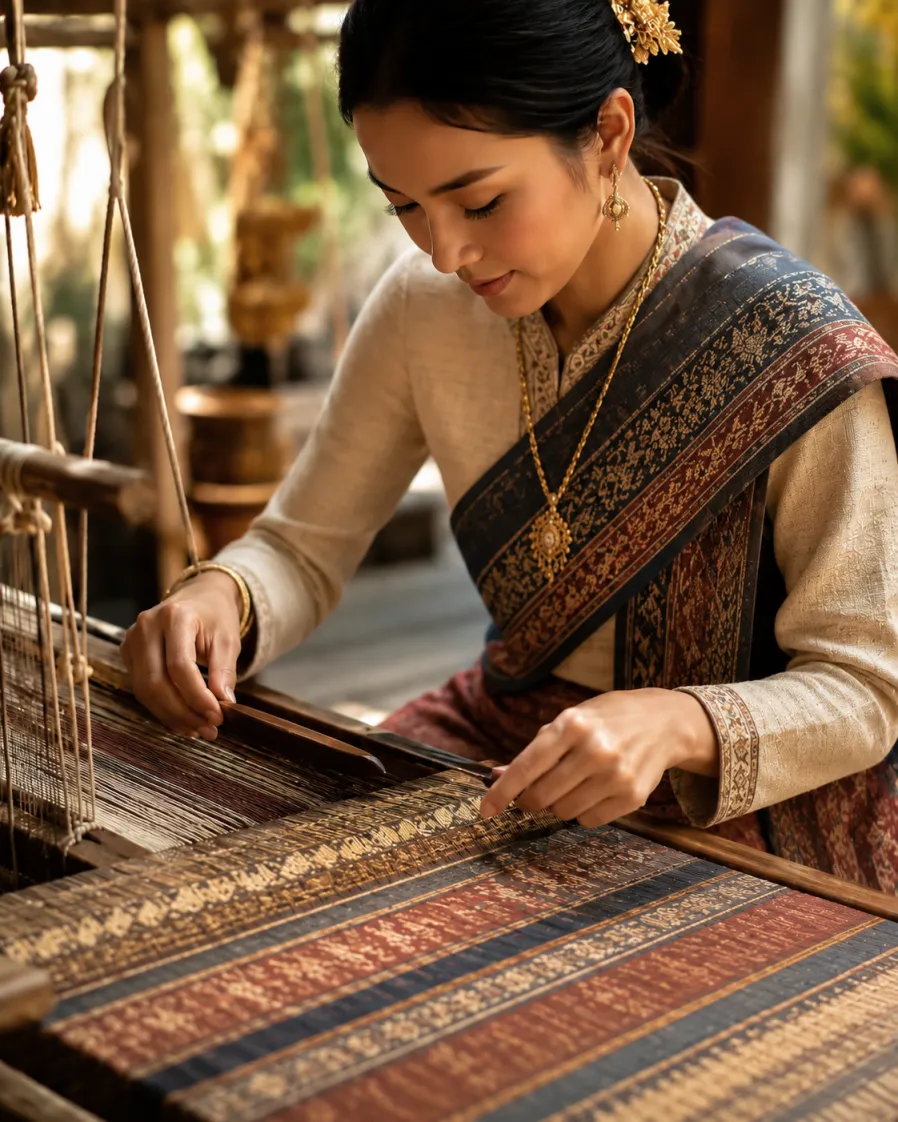
The first time I watched silk being woven by hand, I remember becoming very quiet. At first, I noticed the beauty of the color, the pattern, the subtle shimmer of the silk. But after a few moments, I began to see something deeper. The patience. The memory. The rhythm of the hands. The quiet confidence of someone who understands a craft not from a textbook, but from years of practice.
For me, this is where Thai silk becomes more than fabric. It becomes a story. In Khon Kaen and the surrounding communities of Isan, silk is something to admire or purchase. It is part of identity, heritage, family, and time. It carries the relationship between craft and community. It reminds us that beauty does not always arrive quickly. This is why I believe Thai silk in Khon Kaen deserves to be experienced slowly. Not as a quick stop between attractions, but as a meaningful encounter with the people and traditions behind the beauty.
A Living Tradition in Isan
Silk weaving has long been part of life in Northeast Thailand. In many Isan communities, weaving was not created as a tourist experience. It belonged to family life, ceremony, identity, and local wisdom. Skills were passed down through observation and practice. Patterns were remembered. Colors were chosen with care. Techniques were refined slowly over time.
What moves me most is that this tradition has never been only about the final textile. It is about the process. The preparation of threads. The tying of patterns. The dyeing. The waiting. The weaving. The small adjustments that only experienced hands understand. In a world where so many things are made quickly, handmade silk asks us to slow down and respect the time that goes into beauty.
That is one reason I love including silk experiences in RoamingXplorer journeys. They give travelers a chance to understand the value of craftsmanship not through explanation alone, but through presence. You see the work. You meet the artisan. You feel the patience behind the cloth.
Why Khon Kaen Is Known for Silk
Khon Kaen is one of the important centers of silk weaving in Isan, especially for Mudmee silk, also known as Matmi or ikat silk. Mudmee is a tie-dye technique in which threads are tied and dyed before being woven. The pattern is planned before the weaving begins, which means the artisan must understand the design long before the cloth appears.
I find this fascinating. The beauty is imagined before it can be seen. Every tied thread holds part of the pattern. Every color must be placed with intention. Every movement on the loom slowly reveals what was already planned in the maker’s mind and hands. This is not fast work. It is thoughtful work. And when you understand that the finished textile feels different. You no longer see only a beautiful piece of silk. You see time, skill, memory, and human care.
Khon Kaen’s silk traditions are especially meaningful because they are still connected to local communities. The craft is not separate from life. It belongs to the people who continue to preserve it.
Chonnabot: The Heart of Mudmee Silk
When people speak about silk in Khon Kaen, Chonnabot is often one of the first places mentioned. Chonnabot is known for its Mudmee silk and weaving communities, where the tradition remains deeply respected. For travelers interested in Isan craftsmanship, it is one of the most meaningful places to visit.
But what I find beautiful about Chonnabot is not only the silk itself. It is the feeling of entering a place where craft still has a human face. You may see looms inside homes or community spaces. You may meet artisans who understand each stage of the process. You may see how patterns are created, how threads are prepared, and how a textile slowly comes to life.
There is a quiet dignity in this work. Nothing feels rushed. Nothing feels careless. Every movement has purpose. For many travelers, this kind of experience becomes unexpectedly emotional. It reminds us that beauty does not always come from luxury in the conventional sense. Sometimes, true luxury is being given the time and access to understand what is real.
Ban Phai and the Everyday Rhythm Around Craft
Ban Phai, often written as Ban Pai, offers another layer of Khon Kaen’s cultural landscape. The district is connected to local markets, everyday Isan life, food traditions, and communities where the pace feels grounded and sincere. When paired with Chonnabot, it creates a journey that feels beautifully balanced, one part craft, one part food, one-part local rhythm.
This is important because silk should not be separated from the region’s broader life. A weaving community becomes more meaningful when you also understand the markets, meals, roads, fields, and conversations around it. This is how I like to design cultural travel. Not as isolated stops, but as connected experiences. A morning might begin with food and a glimpse of local life in Ban Phai. The journey may then continue toward Chonnabot, where the pace slows, and the focus turns to silk. Later, a meal brings the story back to the land and the people who live there. When these experiences are curated with care, the day feels less like a tour and more like a gentle unfolding.
From Thread to Textile
The process of creating silk is one of the reasons handmade textiles feel so valuable. Before the cloth is finished, there are many quiet stages. Threads must be prepared. Patterns must be planned. Sections are tied before dyeing so that color appears only where intended. The threads are dyed, dried, arranged, and finally woven by hand. Each step requires patience. Each step carries risk. If the tying is not precise, the pattern changes. If the color is not right, the textile’s mood changes. If the weaving is not careful, the final piece loses its harmony.
This is why meeting artisans personally matters. When you see the process, you understand why handmade silk cannot be compared to mass-produced fabric. It carries the maker’s presence. You begin to understand that every textile has a biography. Someone imagined it. Someone prepared it. Someone sat at the loom and brought it slowly into being.
Why Handmade Textiles Matter Today
In today’s world, we are surrounded by things that are made quickly, bought quickly, and often forgotten quickly. Handmade textiles ask us to think differently. They remind us that beauty can take time. That skill deserves respect. That cultural knowledge must be carried forward, or it can disappear. What we choose to buy, wear, and value can help support real communities.
For travelers, this makes a silk-weaving experience much more than just shopping. It becomes a way to understand the human value behind the object. When you meet the artisan behind a piece of silk, you see the difference between a souvenir and a story. You begin to understand why thoughtful travel matters because it allows us to connect our choices to people, places, and traditions. Food shows us how people live. Craft shows us what they carry forward. Together, they reveal the soul of a place.
Discover Thai Silk in Khon Kaen with RoamingXplorer
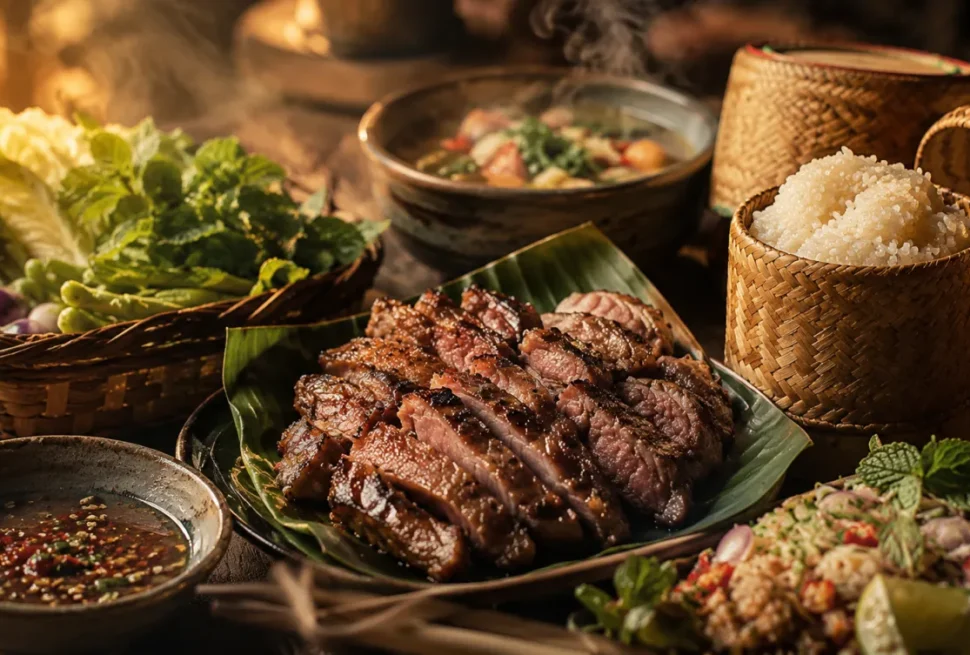
Our Silk & Fire journey was created for travelers who want to experience Khon Kaen through both culture and gastronomy. The silk reveals patience, heritage, and craftsmanship. The food reveals land, flavor, and community. Together, they tell a fuller story of Isan. Through Chonnabot, Ban Phai, local dining, silk traditions, markets, and meaningful cultural encounters, this journey invites guests into the living traditions of Khon Kaen.
It is designed for travelers who want more than sightseeing. Travelers who want to understand what they are seeing. Travelers who value beauty with meaning. Travelers who believe that the most memorable journeys are often the ones that feel personal.
For me, this is the heart of RoamingXplorer. To create journeys where guests do not simply pass through a destination, but feel welcomed into its rhythm. If you are drawn to Thai silk, Isan craftsmanship, local food, and meaningful cultural travel, our Silk & Fire journey was created for you. Come not only to see the beauty of Khon Kaen. Come to understand the hands, stories, and traditions behind it.