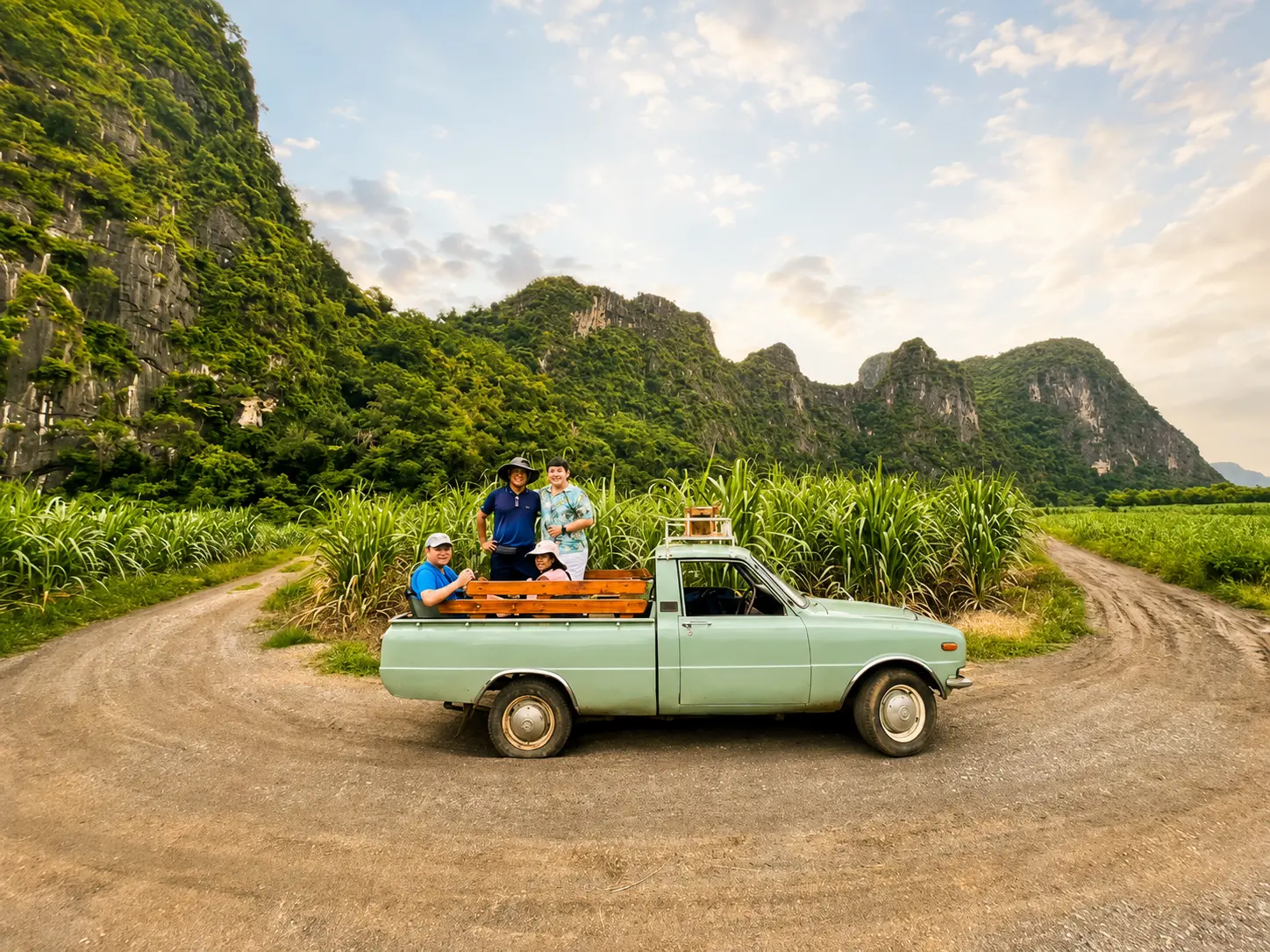
Khon Kaen is often treated as a convenient gateway to Isan, but the province deserves to be experienced as a destination in its own right. Its modern city, recognized gastronomy, ancient landscapes, and quietly preserved rural life offer one of the most rewarding introductions to Northeast Thailand.
Looking Beyond the First Impression
When I first traveled to Khon Kaen, someone who had been born and raised there told me, “There isn’t anything to see here. Khon Kaen isn’t a tourist city.”
Instead of discouraging me, those words made me more curious.
I was not looking for another destination created around tourism. I wanted to understand what made Khon Kaen different. I have always believed that every place in the world has something distinctive to reveal, even when the people who live there no longer recognize it as unusual.
Khon Kaen does not immediately present itself with a single internationally famous landmark. Its character is found in its contrasts: a developed city and a deeply rural countryside, contemporary restaurants and traditional food, university life and ancient geology, modern economic growth and villages where old wooden homes still stand beside rice fields.
To understand Khon Kaen, you have to do more than pass through it. You have to give it time.
The Countryside Scene That Changed My Perspective
My connection with Khon Kaen began not in the city center, but while driving through the countryside towards Phu Pha Man.
Looking out of the car window, I saw farmers planting rice in the fields. Nearby, water buffalo were resting in the water, cooling themselves from the heat. It was a simple scene, completely natural and part of everyday life in Isan.
I asked to stop the car.
I stepped outside and began taking photographs. The local people traveling with me could not understand why I found the scene so interesting.
“What is so special about this?” they asked.
“This is what I want to see,” I told them. “This is authentic Isan, and I want the world to see it.”
Nothing had been arranged for visitors. There was no entrance, performance, or carefully prepared photograph. It was simply life unfolding in its own rhythm.
To the people who lived there, farmers in the rice fields and buffalo in the water were ordinary. To me, they expressed something essential about Isan: its relationship with the land, its agricultural traditions, and the quiet beauty of everyday life.
That moment changed the way I saw Khon Kaen. It also made me question why travelers are so often told there is nothing to see simply because a place is not considered touristy.
Sometimes, what a destination has not turned into a tourist attraction is precisely what makes it worth discovering.
A Modern Isan City with a Strong Regional Identity
One of the most interesting things about Khon Kaen is the contrast between its urban center and the surrounding countryside.
The city itself is well-developed, with contemporary hotels, restaurants, hospitals, shopping centers, cultural spaces, and transport connections. The Tourism Authority of Thailand describes Khon Kaen as a commercial and political center of Northeastern Thailand, and its sense of regional importance becomes clearer the more time you spend there.
Khon Kaen University has played a significant role in this development. Established in 1964, it was the first university founded in Northeast Thailand and was created to expand education, knowledge, and regional development. Today, it remains one of Isan’s leading educational and research institutions. Its history reflects Khon Kaen’s wider role as a center for learning, healthcare and innovation. Khon Kaen University provides an interesting account of how the institution developed alongside the region.
Another place that helped me understand the city better was the Khon Kaen Treasury Museum. Housed in the former northeastern office of the Bank of Thailand, the museum offers a fascinating glimpse into money, trade and the economic development of Khon Kaen and the wider region.
I found it valuable because it provides context. The modern city did not simply appear; it developed through changing systems of trade, finance, education, and regional investment. After visiting the museum, I looked at Khon Kaen differently, not only as a provincial capital, but as a city that has played an important part in Isan’s economic transformation.
Khon Kaen’s Growing Gastronomic Reputation
Food is another reason Khon Kaen deserves more than a brief stop.
Before exploring the province, some travelers may imagine that eating in Khon Kaen means choosing only between simple local restaurants. In reality, its gastronomic landscape is remarkably varied.
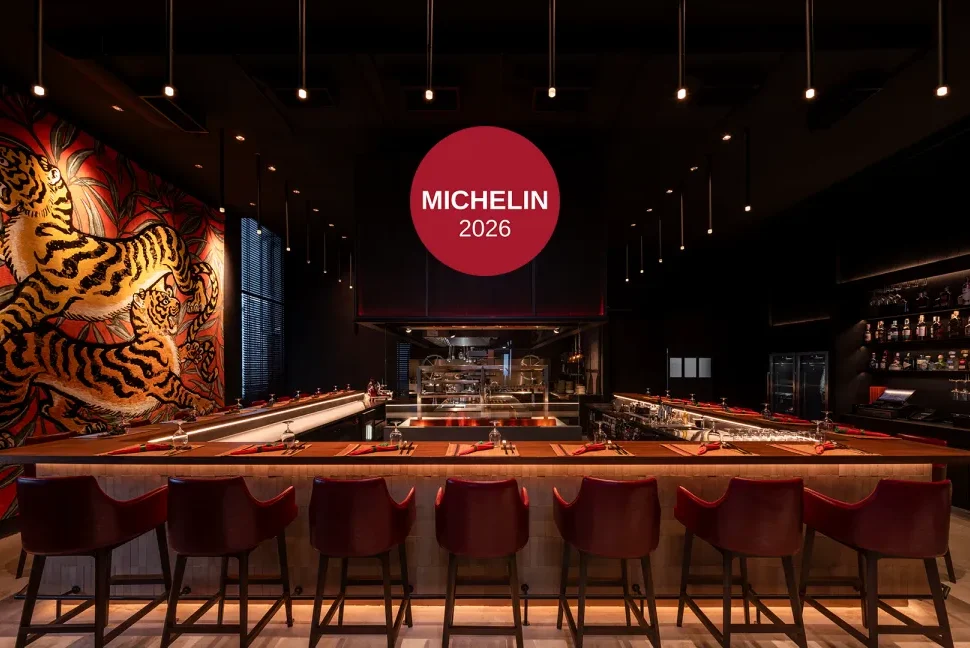
The city offers traditional Isan cooking, family-run restaurants, long-established noodle shops, creative cafés, farm-to-table experiences and contemporary chefs reinterpreting regional ingredients. The MICHELIN Guide’s Khon Kaen selection now includes a broad range of establishments, from street food and Bib Gourmand restaurants to more refined dining.
What interests me most is not recognition for its own sake. It is the way food can reveal the province.
Through a single meal, travelers can begin to understand the importance of sticky rice, herbs, grilled meats, freshwater fish, fermentation, preservation, and seasonal produce. These flavors are connected to climate, agriculture, family knowledge, and the practical realities of life in the Northeast.
Khon Kaen’s food scene allows travelers to experience both continuity and change: traditional recipes remain present while a new generation of chefs gives Isan cuisine a more contemporary voice.
From Dinosaurs to Ancient Landscapes
Beyond the city, Khon Kaen opens into a completely different world.
Phu Wiang is one of the clearest examples. Dinosaur fossils were discovered in this part of the province, transforming it into one of Thailand’s most important areas for palaeontological study.
I was impressed by the Phu Wiang Dinosaur Museum because it does much more than display dinosaur models. It introduces visitors to geology, fossils, the development of life, and the scientific work behind the discoveries. The surrounding Phu Wiang area also contains multiple excavation sites, allowing visitors to connect the museum displays with the landscape where fossils were actually found. Thailand’s Department of Mineral Resources provides further background on the Phu Wiang dinosaur discoveries and excavation sites.
This is an excellent experience for families, but it should not be regarded as a children’s attraction alone. For me, it adds an entirely different dimension to Khon Kaen. The province is not only connected to modern Isan life; its landscape holds evidence of a world that existed millions of years before us.
Khon Kaen is also home to Kaeng Lawa, an important wetland in the Chi River Basin. It supports water storage, biodiversity, fisheries, animal grazing, and the livelihoods of surrounding communities. Its importance is environmental, economic, and cultural, not merely scenic. WWF’s account of Kaeng Lawa helps explain why conserving this landscape matters.
How Much Time Should You Spend in Khon Kaen?
A brief overnight stay may introduce you to the city, but it will not reveal the province.
For a meaningful first visit, I recommend at least three days and two nights. Four days and three nights are even better if you want to combine the city with its food, countryside, heritage, and natural landscapes without rushing.
A well-balanced visit might include:
- One day exploring the city’s museums, temples and restaurants
- One full day traveling to Phu Wiang and the surrounding ancient landscape
- One day, discovering rural communities, food traditions, silk, farming, or wetlands
The experiences outside the city are spread across the province, so thoughtful route planning is important. A private vehicle and local knowledge make it easier to connect several places comfortably while allowing enough time for unplanned discoveries.
I would also encourage travelers not to judge Khon Kaen only by conventional sightseeing standards. Look beyond the question, “What famous attraction can I photograph?” Pay attention to the markets, food, farms, wooden homes, changing landscapes, and conversations with local people.
Khon Kaen reveals itself through context and connection.
Why Khon Kaen Remains with Me
I have traveled to more than 50 countries and experienced many celebrated cities, monuments, and landscapes. Yet when people ask me about the best place I have visited, my answer is often Khon Kaen.
It is not because Khon Kaen has the world’s most famous landmark. It is because of how the province made me feel.
It gave me the excitement of discovering something that had not been presented to me in advance. I found a modern city with ambition, a countryside still connected to the land, food with history, communities carrying generations of knowledge, and landscapes reaching back to prehistoric times.
Khon Kaen reminded me that meaningful travel is not always about going somewhere famous. Sometimes it begins when we give an overlooked place the time and attention it deserves.
Discover Khon Kaen with RoamingXplorer
Khon Kaen is one of the most rewarding places to begin exploring Isan. Through food, craft, history, nature, and everyday local life, the province offers a deeper introduction to Northeast Thailand.
RoamingXplorer’s Khon Kaen journeys are designed to reveal these different layers with time, comfort and meaningful local connection.
Come for more than a stop. Leave with a different understanding of Isan.